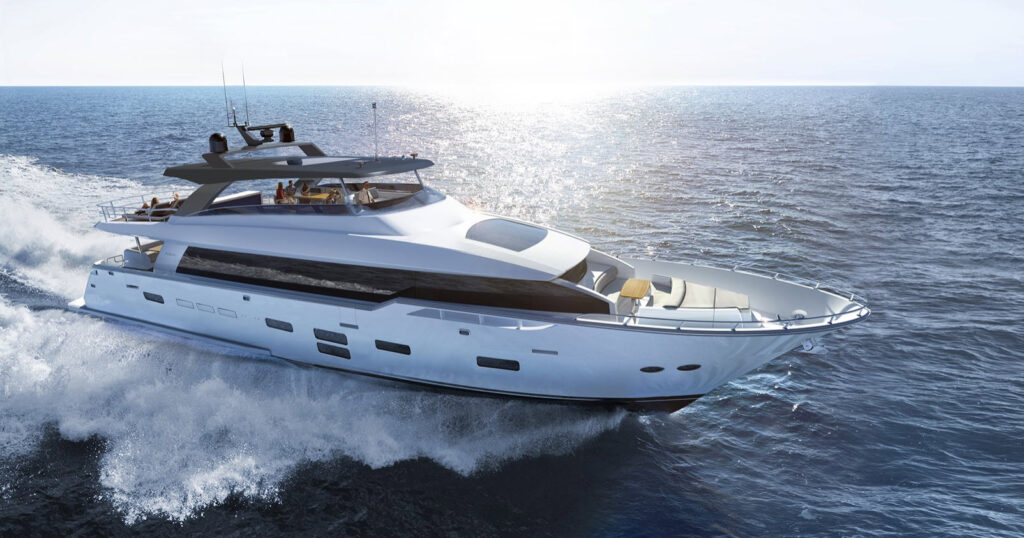
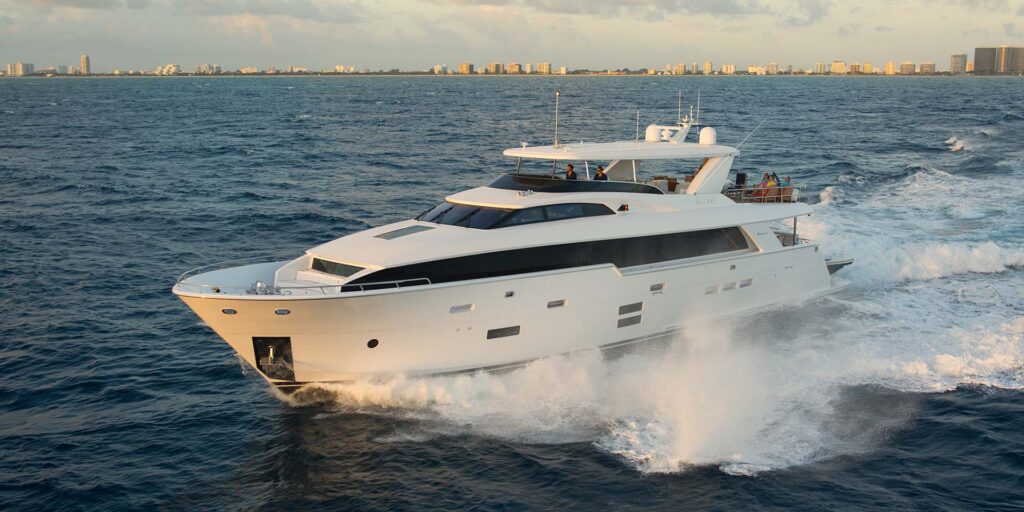
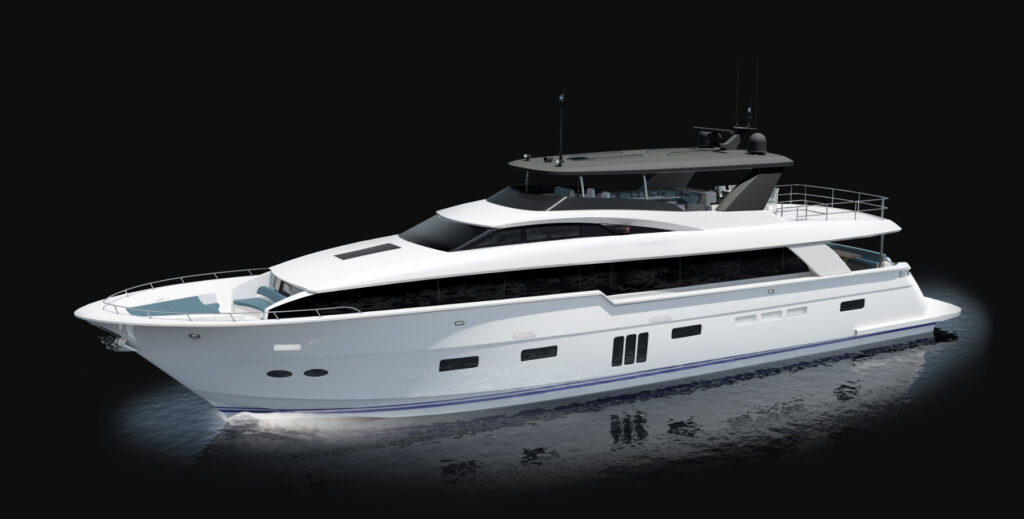
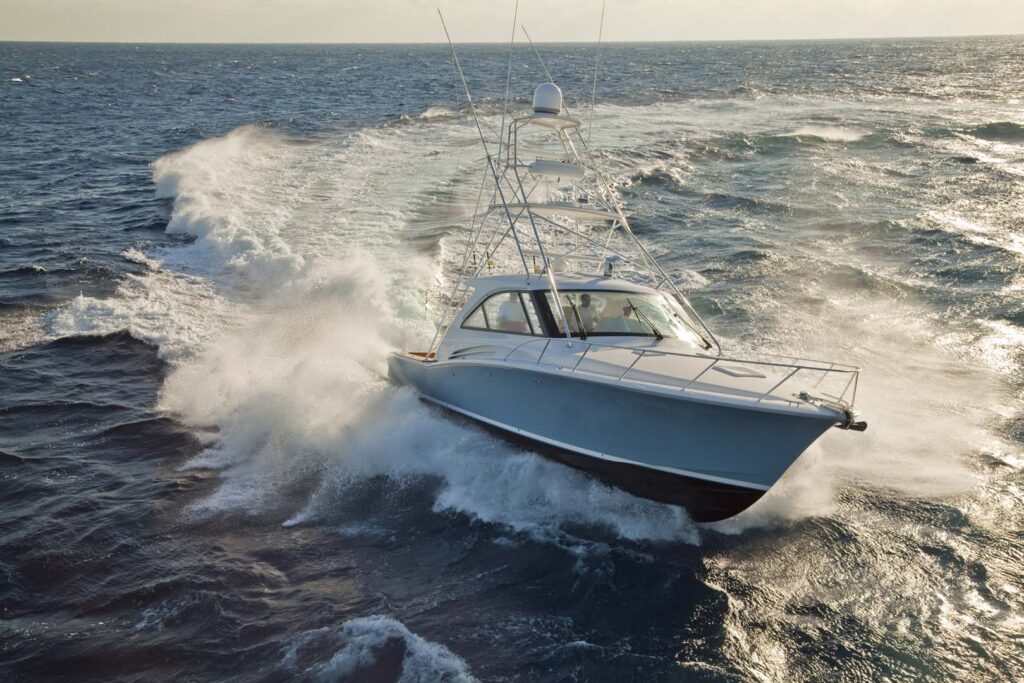
 Used Merritt 43 Custom Sportfish For Sale
PriceLoading
Length43'
BeamN/A
Used Merritt 43 Custom Sportfish For Sale
PriceLoading
Length43'
BeamN/A
The cold-molded process (also known as the West Method) is a method of construction layering thin sheets of plywood, typically mahogany over a series of precisely placed frames that form the hull jig, which is upside down—the hull bottom is facing up, which is much easier to work. Thin wood sheets are layered in alternating directions and fiberglass cloth (best) or mat is added as the final layers. It’s called “cold-mold” because the epoxy resin fully cures at room temperature. Once the layering and minimal fairing process is complete, the finished hull is lifted by crane and righted.
All the frames that formed the jig are removed, leaving just the fiberglass-plywood composite shell. Some of the cold-molded method’s advantages over the traditional plank-on-frame construction are a stronger than steel, lighter weight composite hull and greater interior space without all the transversals. A stronger, lighter weight hull yields many benefits, but mainly increased performance and efficiency—use less horsepower/less fuel to push through the sea, and durable strength to take on the rigors of sportfishing.
Roy Merritt’s first cold-molded Merritt 43ft, hull #23, was built in 1975 for client Jo Jo Del Guercio, whose request for a custom multiple rod holder led to Merritt’s development of the first “rocket launcher” for holding trolling rods.
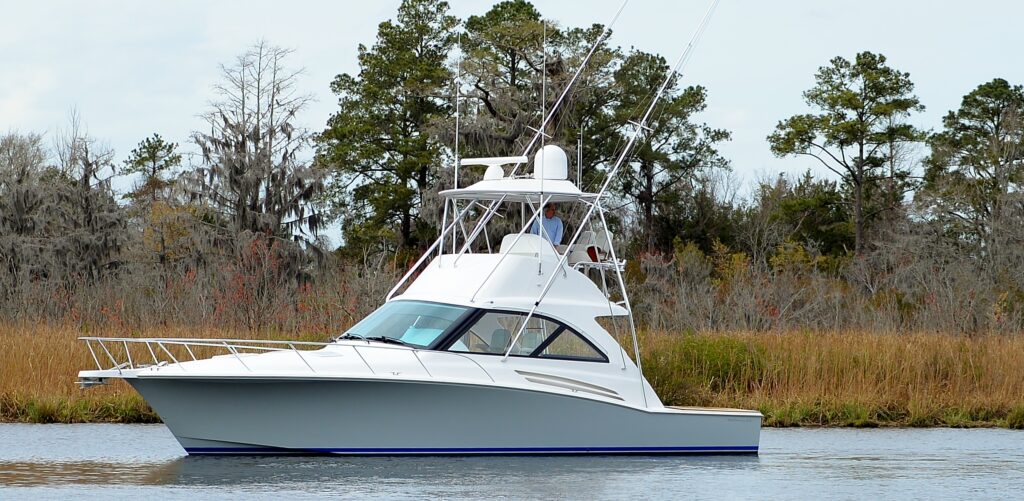
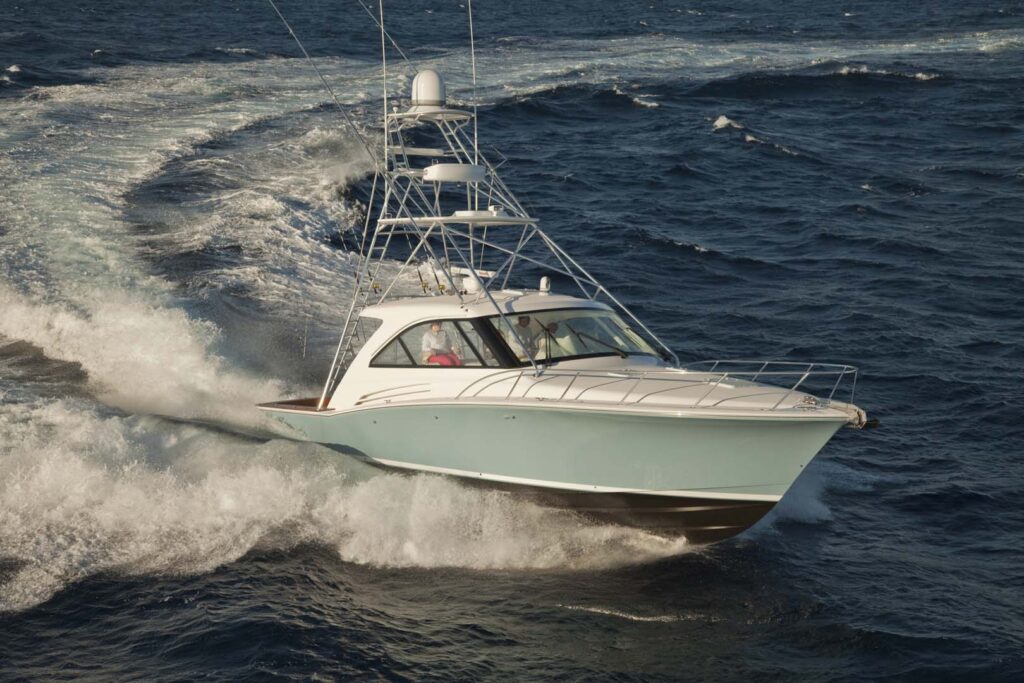
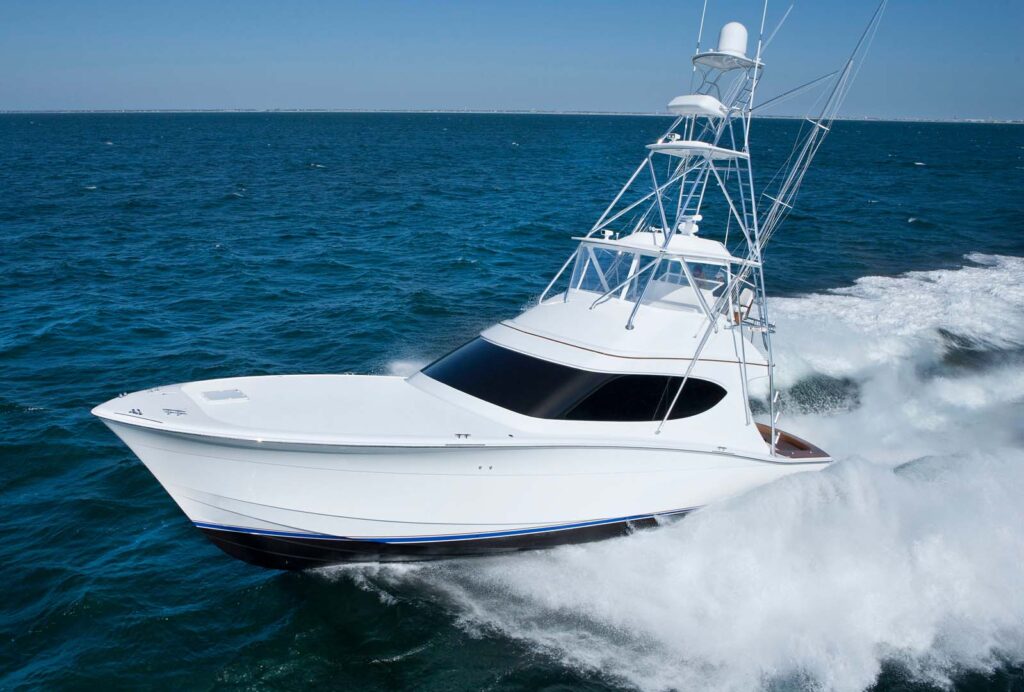
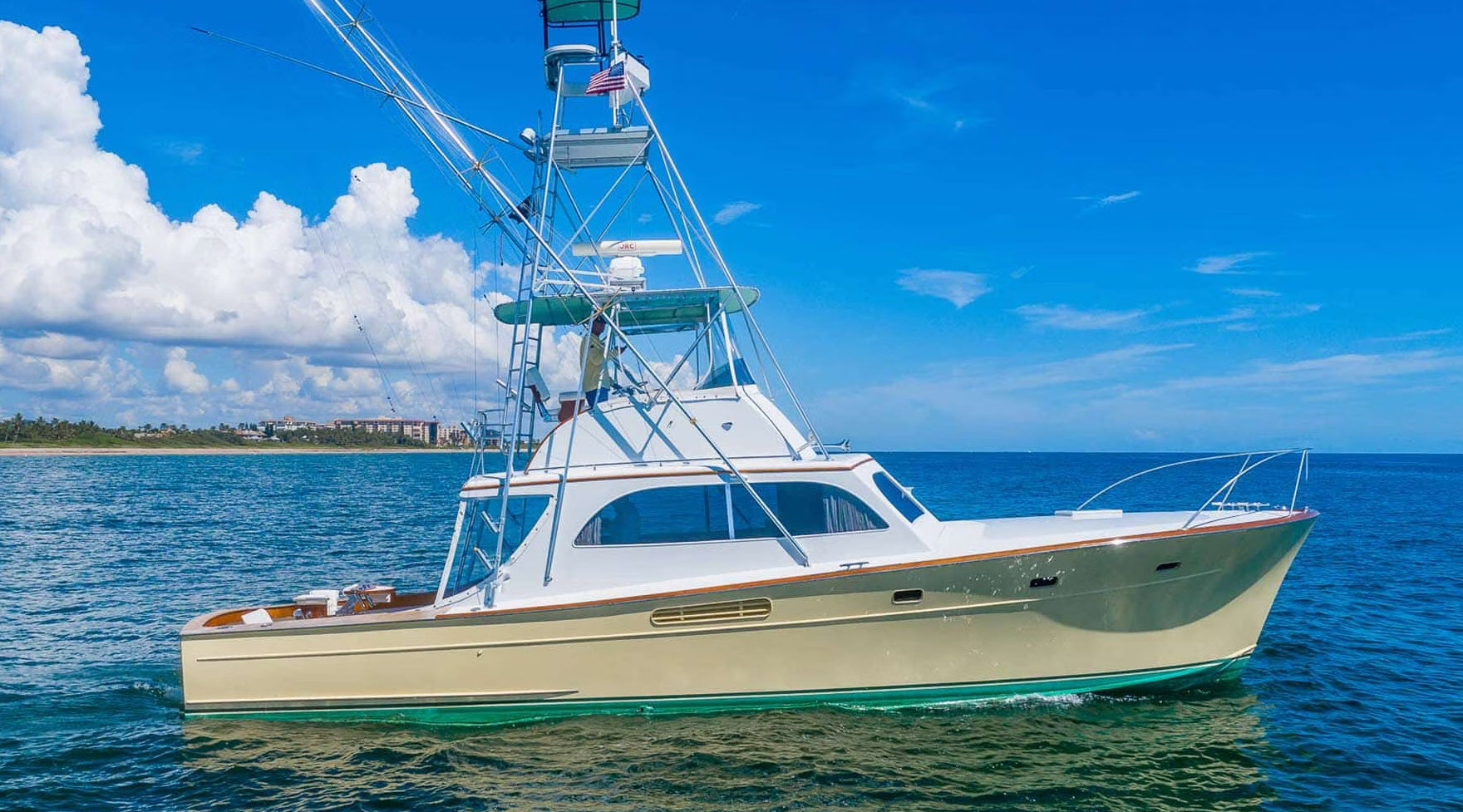
Today these beautiful historic Merritt custom sportfish models are prized classics and most have been maintained, updated and upgraded over the years, yet still retain the distinctive Merritt sportfish profile and stunning interior joinery.
- Make
- Hatteras Yachts
- Length
- 43'
- Model
- 43
- Length Overall
- 43'
Summary
The cold-molded process (also known as the West Method) is a method of construction layering thin sheets of plywood, typically mahogany over a series of precisely placed frames that form the hull jig, which is upside down—the hull bottom is facing up, which is much easier to work. Thin wood sheets are layered in alternating directions and fiberglass cloth (best) or mat is added as the final layers. It’s called “cold-mold” because the epoxy resin fully cures at room temperature. Once the layering and minimal fairing process is complete, the finished hull is lifted by crane and righted.
All the frames that formed the jig are removed, leaving just the fiberglass-plywood composite shell. Some of the cold-molded method’s advantages over the traditional plank-on-frame construction are a stronger than steel, lighter weight composite hull and greater interior space without all the transversals. A stronger, lighter weight hull yields many benefits, but mainly increased performance and efficiency—use less horsepower/less fuel to push through the sea, and durable strength to take on the rigors of sportfishing.
Roy Merritt’s first cold-molded Merritt 43ft, hull #23, was built in 1975 for client Jo Jo Del Guercio, whose request for a custom multiple rod holder led to Merritt’s development of the first “rocket launcher” for holding trolling rods.
Today these beautiful historic Merritt custom sportfish models are prized classics and most have been maintained, updated and upgraded over the years, yet still retain the distinctive Merritt sportfish profile and stunning interior joinery.
Hatteras Used Merritt 43 Custom Sportfish For Sale Listings
Used Merritt 43 Custom Sportfish For Sale
PriceLoading
Length43'
BeamN/A
Used Merritt 43 Custom Sportfish For Sale
PriceLoading
Length43'
BeamN/A
Used Merritt 43 Custom Sportfish For Sale
PriceLoading
Length43'
BeamN/A
Used Merritt 43 Custom Sportfish For Sale
PriceLoading
Length43'
BeamN/A
Worldwide Yacht Sales
Aft Cabin Boats
 Center-Console Boats
Convertible Sportfish Boats
Cruising Boats
Downeast Boats
Expedition Yachts
Express Cruiser Boats
Flybridge Boats
High-Performance Racing Boats
Live Aboard Boats
Motor Yachts
Motorsailer Boats
Pilothouse Boats
Power Catamarans
Sail Boats
Sailing Catamaran Boats
Sport Cruiser Boats
Sport Fishing Boats
Superyachts
Trawler Boats
Center-Console Boats
Convertible Sportfish Boats
Cruising Boats
Downeast Boats
Expedition Yachts
Express Cruiser Boats
Flybridge Boats
High-Performance Racing Boats
Live Aboard Boats
Motor Yachts
Motorsailer Boats
Pilothouse Boats
Power Catamarans
Sail Boats
Sailing Catamaran Boats
Sport Cruiser Boats
Sport Fishing Boats
Superyachts
Trawler Boats
Center-Console Boats
Convertible Sportfish Boats
Cruising Boats
Downeast Boats
Expedition Yachts
Express Cruiser Boats
Flybridge Boats
High-Performance Racing Boats
Live Aboard Boats
Motor Yachts
Motorsailer Boats
Pilothouse Boats
Power Catamarans
Sail Boats
Sailing Catamaran Boats
Sport Cruiser Boats
Sport Fishing Boats
Superyachts
Trawler Boats
Luxury Boats & Yachts
Aft Cabin Boats
Center-Console Boats
Convertible Sportfish Boats
Cruising Boats
Downeast Boats
Expedition Yachts
Express Cruiser Boats
Flybridge Boats
High-Performance Racing Boats
Live Aboard Boats
Motor Yachts
Motorsailer Boats
Pilothouse Boats
Power Catamarans
Sail Boats
Sailing Catamaran Boats
Sport Cruiser Boats
Sport Fishing Boats
Superyachts
Trawler Boats
Center-Console Boats
Convertible Sportfish Boats
Cruising Boats
Downeast Boats
Expedition Yachts
Express Cruiser Boats
Flybridge Boats
High-Performance Racing Boats
Live Aboard Boats
Motor Yachts
Motorsailer Boats
Pilothouse Boats
Power Catamarans
Sail Boats
Sailing Catamaran Boats
Sport Cruiser Boats
Sport Fishing Boats
Superyachts
Trawler Boats
Popular Builders & Models
Aft Cabin Boats
Center-Console Boats
Convertible Sportfish Boats
Cruising Boats
Downeast Boats
Expedition Yachts
Express Cruiser Boats
Flybridge Boats
High-Performance Racing Boats
Live Aboard Boats
Motor Yachts
Motorsailer Boats
Pilothouse Boats
Power Catamarans
Sail Boats
Sailing Catamaran Boats
Sport Cruiser Boats
Sport Fishing Boats
Superyachts
Trawler Boats
Center-Console Boats
Convertible Sportfish Boats
Cruising Boats
Downeast Boats
Expedition Yachts
Express Cruiser Boats
Flybridge Boats
High-Performance Racing Boats
Live Aboard Boats
Motor Yachts
Motorsailer Boats
Pilothouse Boats
Power Catamarans
Sail Boats
Sailing Catamaran Boats
Sport Cruiser Boats
Sport Fishing Boats
Superyachts
Trawler Boats
Trending Brands & Types
Aft Cabin Boats
Center-Console Boats
Convertible Sportfish Boats
Cruising Boats
Downeast Boats
Expedition Yachts
Express Cruiser Boats
Flybridge Boats
High-Performance Racing Boats
Live Aboard Boats
Motor Yachts
Motorsailer Boats
Pilothouse Boats
Power Catamarans
Sail Boats
Sailing Catamaran Boats
Sport Cruiser Boats
Sport Fishing Boats
Superyachts
Trawler Boats
Center-Console Boats
Convertible Sportfish Boats
Cruising Boats
Downeast Boats
Expedition Yachts
Express Cruiser Boats
Flybridge Boats
High-Performance Racing Boats
Live Aboard Boats
Motor Yachts
Motorsailer Boats
Pilothouse Boats
Power Catamarans
Sail Boats
Sailing Catamaran Boats
Sport Cruiser Boats
Sport Fishing Boats
Superyachts
Trawler Boats
Speak To A Hatteras Yachts Sales Professional
250+Professional Yacht Brokers
20Offices World Wide
10,000+Yachts For Sale Online